As we become prey to the stress that finals bring, it is important part of studying to analyze the changes that we have gone through during the past semester, as it can point to a focus for improving in the coming one. In this post I shall focus on how my writing style, as well as analysis of events, has changed over my blog posts.
While I have improved on my analysis of evidence over the semester, I have also allowed myself to become lazy. The concept that regularly escapes me is that of selection; I trouble myself with dense, sometimes philosophical explanations for things when very little is needed. The goal that I have outlined for myself the second semester is to make my points with the smallest amount language necessary to make it effective, and I will accomplish this through a system of revisions I will outline later.
In my first blog post, I made an attempt at analyzing a short video about biological science, and I barely scratched the surface of its sub-textual meaning. My only analysis of the video itself was that it "came as a surprise to me". To start, the word "surprise" has really no meaning in regards of the article and expresses no opinion towards its contents. Thus the "analysis" is missing, and all I have presented is a reaction. This is totally devoid of any sympathy for the reader as I am relying on them to come up with the analysis for me. This is unfair to them, as my job as the writer is to clear up key issues for the reader.
Around my fifth blog post, we had started to talk explicitly about storytelling in class, and that prompted me to start to piece together, slowly but surely, different pieces of the metaphorical puzzle. In my sixth blog post about the play that our class had the pleasure of seeing, Clybourne park, I was intrigued as to the name appearing in the surrounding area as a street. I wrote a short paragraph of analysis that dug a little bit deeper than my earlier surprise and is the first time that I show real progress in the evolution of my posts.
Yet, with the ability to effectively analyze, comes a sense of over-confidence (or at least for me it seams to have) as I started to stray from the analysis of texts and started to spew intellectual psychobabble. This is most evident in my post "Global Suicide" in which I re-explain the philosophy behind an article indicting anthropocentric ideals. What exactly this article said does not truly matter, the only thing that needs to be known is that it was deeply philosophical and that I was unable to escape that realm when writing my post.
Blog posts should be short, concise, to the point, and interesting - that last post did not meet any of those requirements and was what truly made me start to become aware of my own writing in this regard.
So, how can I begin to work on these challenges?
My main goal is clarity. That means, for me, that I must map out very carefully the points that I want to make before making them, as in my own case, on the spot writing is always a conscious stream, verbose and intellectual as though I am letting all of my thoughts spill onto paper. This has no sympathy for the reader and will ultimately hurt me.
As this post is about concision of though I will sum up what I have said here and then be done:
1) My past blog posts have gone from under-analyzed, to okay-analyzed, back to under-analyzed, while I thought that they were always improving.
2) This deprives my writing of crucial sympathy for the reader and makes it seem as though it is a written stream of thought and not well-thought out writing.
3) The way in which I can start to work on this is by being aware of why I am writing something every moment I am writing it, and to stop myself and reflect if I become unintelligible. It is all about clarity for me.
As this post is partly about concision of thought, I will stop here as I have presented my arguments,
thanks for reading!

January 13, 2012

January 12, 2012
Indifference
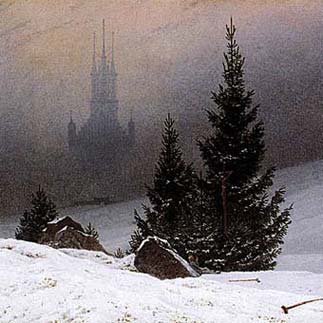 This morning, as the frigid air that surrounds our American Studies class crept in through the cracks in the windows (seemingly from the very fibers of the walls that enclosed us), I was reintroduced to the piece "Those Winter Sundays" by Robert Hayden, as well as the interview of Bill Jones over his choice of "Winterreise" as his personal favorite Christmas song.
Throughout the discussion, and even afterwards as I passed the time among dodge balls and friends, I was focused on a single concept that had been slightly touched upon, but for myself it had not been enough.
In the tenth line of Hayden's poem, he describes a way of talking to his father as "indifferent", literally to have no interest or sympathy at all! As in Jones' piece, despite his feeling of extremely intense devotion and love for his father he cannot remember whether or not within their time together he afforded his father any sort of thanks.
Thus the conundrum: how can two people who profess such deep love for the person that sacrificed such a large portion of their life for them feel "indifferent", when the very notion of acknowledging that sacrifice is brought into question?
What is it, in other words, that makes them unable to utter their true feelings?
Of my own belief, I think that it is a sense of duty that has been passed down between generations to keep your feelings to yourself as they alone are part of the definition of vulnerability.
Vulnerability is to be avoided at all costs. Or at least that is what I am getting from the piece, I am interested to see if anyone has any alternative views on this question as this is a very interesting piece of writing we have here.
January 03, 2012
The Key to Keynes: Why Reagonomics Will Always Fail Pt. 1
It is about time I did a series, and what better a topic to analyze than the one that is on everybody's mind nowadays; the economy. The very URL to this site gives a hint to my personal opinion about the best form for a National/International economy as it includes the name Keynes; I think it is time that I justified exactly why I included that as part of the title.
Blog posts do not come out of thin air, and the prompting for this specific post was some malcontent that I had towards news that the stock market closed very near to its starting point a year later at the end of 2011. This may not seem like a large development to those who do not watch the market clearly, but it is an indication that the very progress that so many Americans are holding dear to their hearts is just not happening.
What I will try to prove in this series of blog posts is that in a world in which the rich are allowed to eat the poor, money will never trickle down. Thus the anarchical capitalist monolith cannot self sustain without regulation.
By regulation, I mean a strong government hand that will make sure that profit never overcomes hunger - that people's own greed never causes a person enough hardship to not be able to have enough money to feed her own family.
The rich eat the poor when they are allowed to. The current fiscal catastrophe is a testament to this very fact, and exactly what the ninety-nine percent occupy rallies are protesting. To provide some statistics, in the past five years, the income of the top one percent of America has increased by two hundred thousand dollars a year, to near two million dollars of NET income per year. This is contrasted with the decrease in net income of an average person that is considered under the poverty line being two thousand dollars.
In these harsh economic times, the rich are allowing themselves to get richer and the poor are being forced through the gutter, so to speak.
In the next part of this series I will provide a few more statistics to describe our current economic times, as well as delve into the flaws of the system, and how an alternate economic state could benefit all aspects of society.
Blog posts do not come out of thin air, and the prompting for this specific post was some malcontent that I had towards news that the stock market closed very near to its starting point a year later at the end of 2011. This may not seem like a large development to those who do not watch the market clearly, but it is an indication that the very progress that so many Americans are holding dear to their hearts is just not happening.
What I will try to prove in this series of blog posts is that in a world in which the rich are allowed to eat the poor, money will never trickle down. Thus the anarchical capitalist monolith cannot self sustain without regulation.
By regulation, I mean a strong government hand that will make sure that profit never overcomes hunger - that people's own greed never causes a person enough hardship to not be able to have enough money to feed her own family.
The rich eat the poor when they are allowed to. The current fiscal catastrophe is a testament to this very fact, and exactly what the ninety-nine percent occupy rallies are protesting. To provide some statistics, in the past five years, the income of the top one percent of America has increased by two hundred thousand dollars a year, to near two million dollars of NET income per year. This is contrasted with the decrease in net income of an average person that is considered under the poverty line being two thousand dollars.
In these harsh economic times, the rich are allowing themselves to get richer and the poor are being forced through the gutter, so to speak.
In the next part of this series I will provide a few more statistics to describe our current economic times, as well as delve into the flaws of the system, and how an alternate economic state could benefit all aspects of society.
January 01, 2012
Could We Have Done More?
The year 2011 is over. With it brings ceremonial celebrations, very merry holidays, and for some just a bit too much to drink. But what is the true significance of the New Year?
For many, there is no significance, the coming of yet another year is but a regular occurrence that allows for a measurement of the past. Though, for others, the New Year brings with it a seemingly lost sense of hope. It invigorates you to get off of the couch and use that membership that was bought for you over the holidays at the local gym. Yet it sometimes seems odd to me that the with the acknowledgment that we have entered into a new era, we actively try to rid ourselves of the past.
I would be remiss to think that energy that comes with the clock ticking January the first, comes a much more depressing theme in American life. We allow so easily a new year to come because we are actively trying to forget the past. People who are overweight use it as a motivation to lose those extra twenty or so pounds, people who did not do so well in school use it as a motivation to study for their finals (trust me, this one I have experienced personally), but to what end? At the end of this wonderful new opportunity, when the horizon is about to set once again on the New Year, the same people are asking for exactly the same thing!
So, here is an open ended question, what more could we have done in the past year? If we allow the New Year not to be a time in which we try to FORGET, but as a time to REFLECT, then maybe we will no longer have anything to REGRET.
A way in which people do this, a way in which they forget, is by turning all of their troubles into resolutions, a list of tasks that they wish to complete in the new year, a way of changing themselves.
It seems almost quintessentially American to do this, I myself have done it every year, yet as I expand my frame of reference it seems as though no other countries do it. Through having asked my friend from other countries, they in fact practice another ritual all together.
Jonaas, a friend of mine from Austria, sent me a letter which had only one question on it; he has quite the dramatic flare.
The question that he put on there was one that has been asked to him every year on New Years eve for all of his years. It was this: in the past year, what do you regret having done, how will you make sure that it does not happen again in the coming year?
Instead of making a resolution, he uses the past to better form his future. Is it then an American value to try and cover up the past and promise to the future that it would not happen again, only to find out that your promise cannot be fulfilled?
For many, there is no significance, the coming of yet another year is but a regular occurrence that allows for a measurement of the past. Though, for others, the New Year brings with it a seemingly lost sense of hope. It invigorates you to get off of the couch and use that membership that was bought for you over the holidays at the local gym. Yet it sometimes seems odd to me that the with the acknowledgment that we have entered into a new era, we actively try to rid ourselves of the past.
I would be remiss to think that energy that comes with the clock ticking January the first, comes a much more depressing theme in American life. We allow so easily a new year to come because we are actively trying to forget the past. People who are overweight use it as a motivation to lose those extra twenty or so pounds, people who did not do so well in school use it as a motivation to study for their finals (trust me, this one I have experienced personally), but to what end? At the end of this wonderful new opportunity, when the horizon is about to set once again on the New Year, the same people are asking for exactly the same thing!
So, here is an open ended question, what more could we have done in the past year? If we allow the New Year not to be a time in which we try to FORGET, but as a time to REFLECT, then maybe we will no longer have anything to REGRET.
A way in which people do this, a way in which they forget, is by turning all of their troubles into resolutions, a list of tasks that they wish to complete in the new year, a way of changing themselves.
It seems almost quintessentially American to do this, I myself have done it every year, yet as I expand my frame of reference it seems as though no other countries do it. Through having asked my friend from other countries, they in fact practice another ritual all together.
Jonaas, a friend of mine from Austria, sent me a letter which had only one question on it; he has quite the dramatic flare.
The question that he put on there was one that has been asked to him every year on New Years eve for all of his years. It was this: in the past year, what do you regret having done, how will you make sure that it does not happen again in the coming year?
Instead of making a resolution, he uses the past to better form his future. Is it then an American value to try and cover up the past and promise to the future that it would not happen again, only to find out that your promise cannot be fulfilled?
Subscribe to:
Posts (Atom)